8 March 2026
Preserved & Dried Flowers: Do They Really Last?
Wondering how long preserved and dried flower arrangements actually last? We break down the difference, realistic lifespans, and how to get the most from your arrangement.
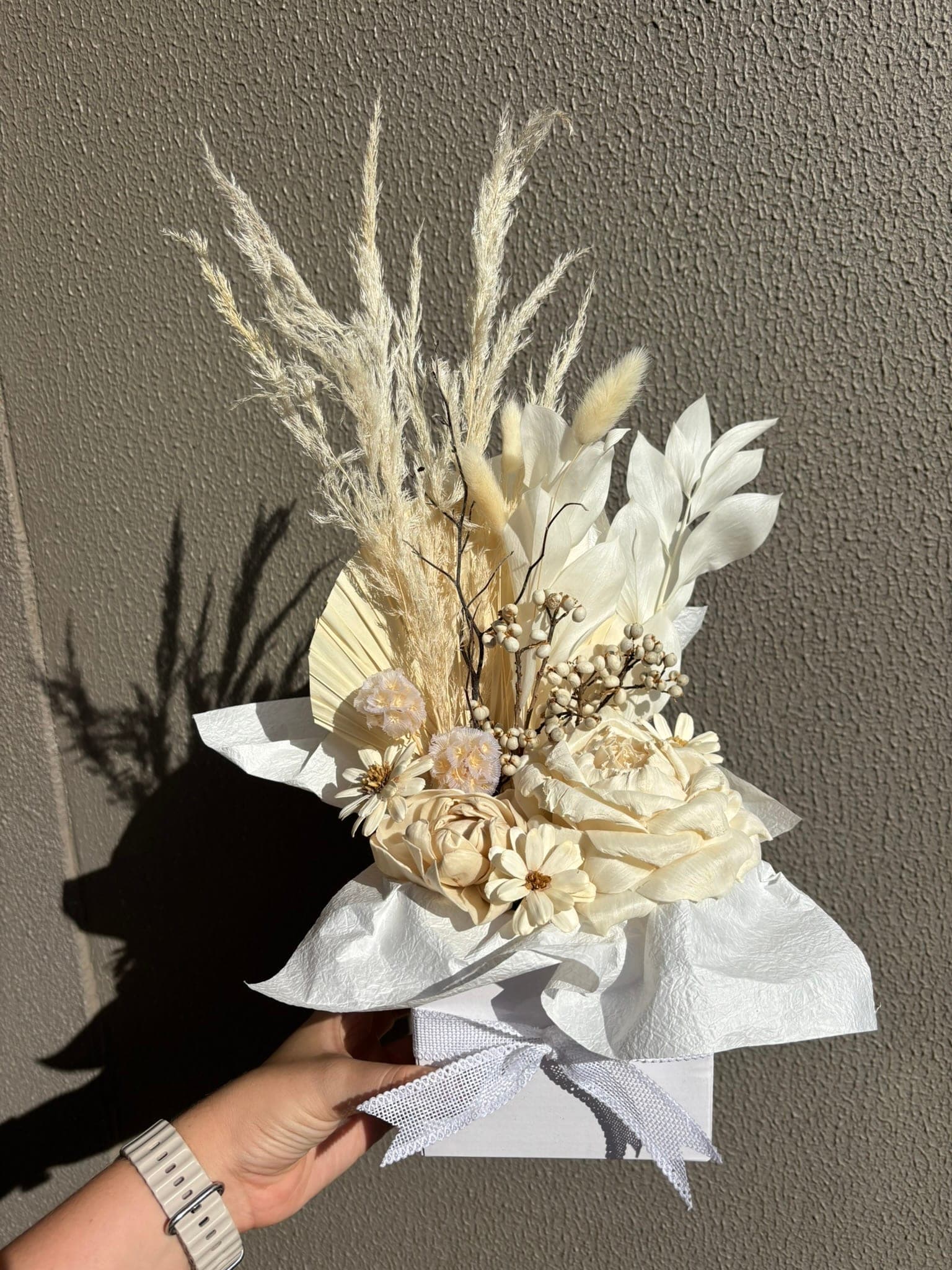
One of the most common questions we get at Studio Terra is some version of: "But do they actually last?" It's a fair question — most people's experience of flowers is a bunch that looks glorious for three days and is in the bin by Thursday.
Preserved and dried flowers are different. Here's everything you need to know.
What's the difference between preserved and dried flowers?
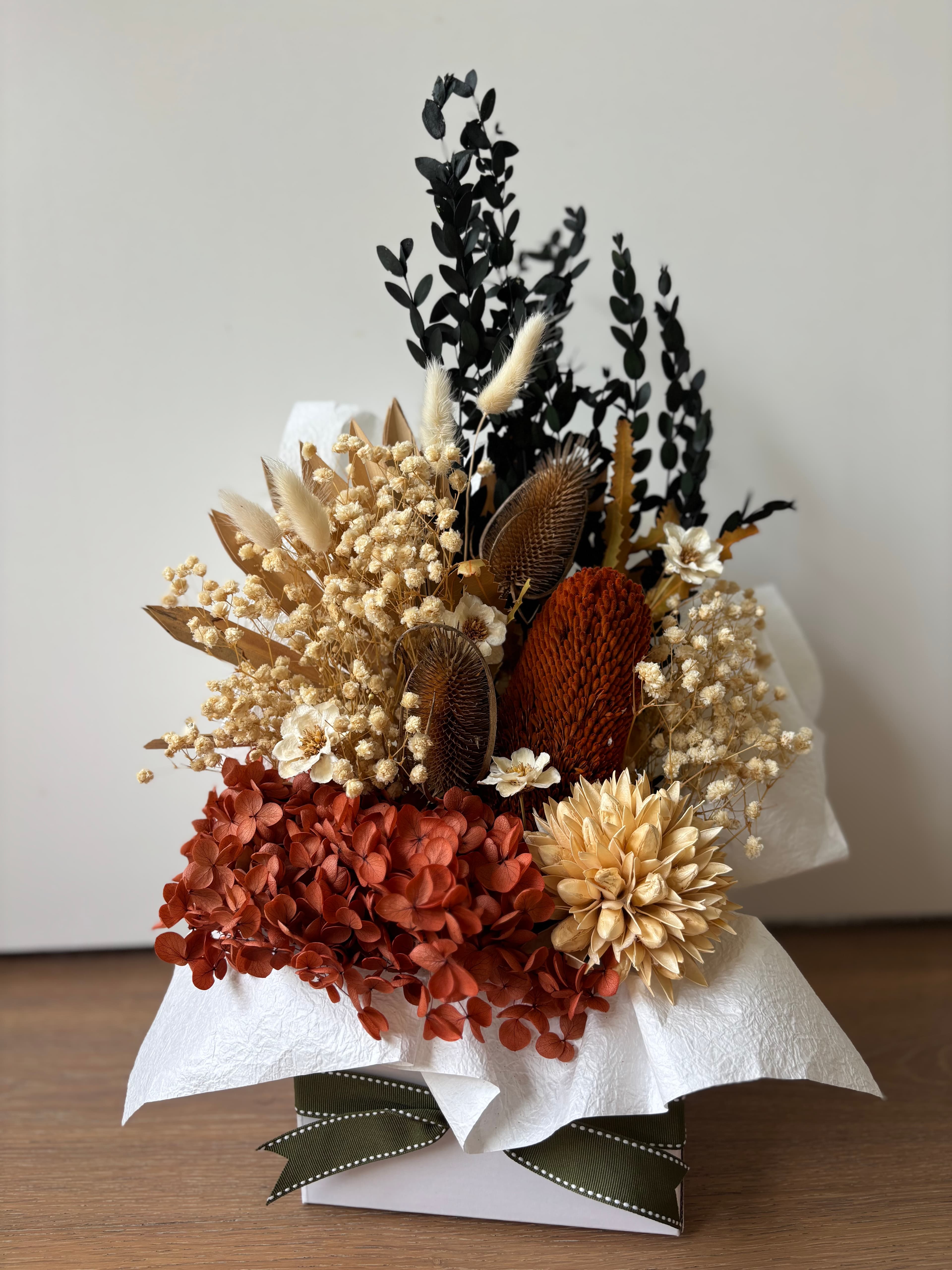
Dried flowers are botanicals that have had their moisture removed — usually by hanging them upside-down in a cool, dry space, or through silica desiccants. The process concentrates the natural pigments and textures of the flower, giving that beautifully muted, earthy palette. Pampas grass, statice, strawflowers, banksia, and bunny tails are classic dried varieties.
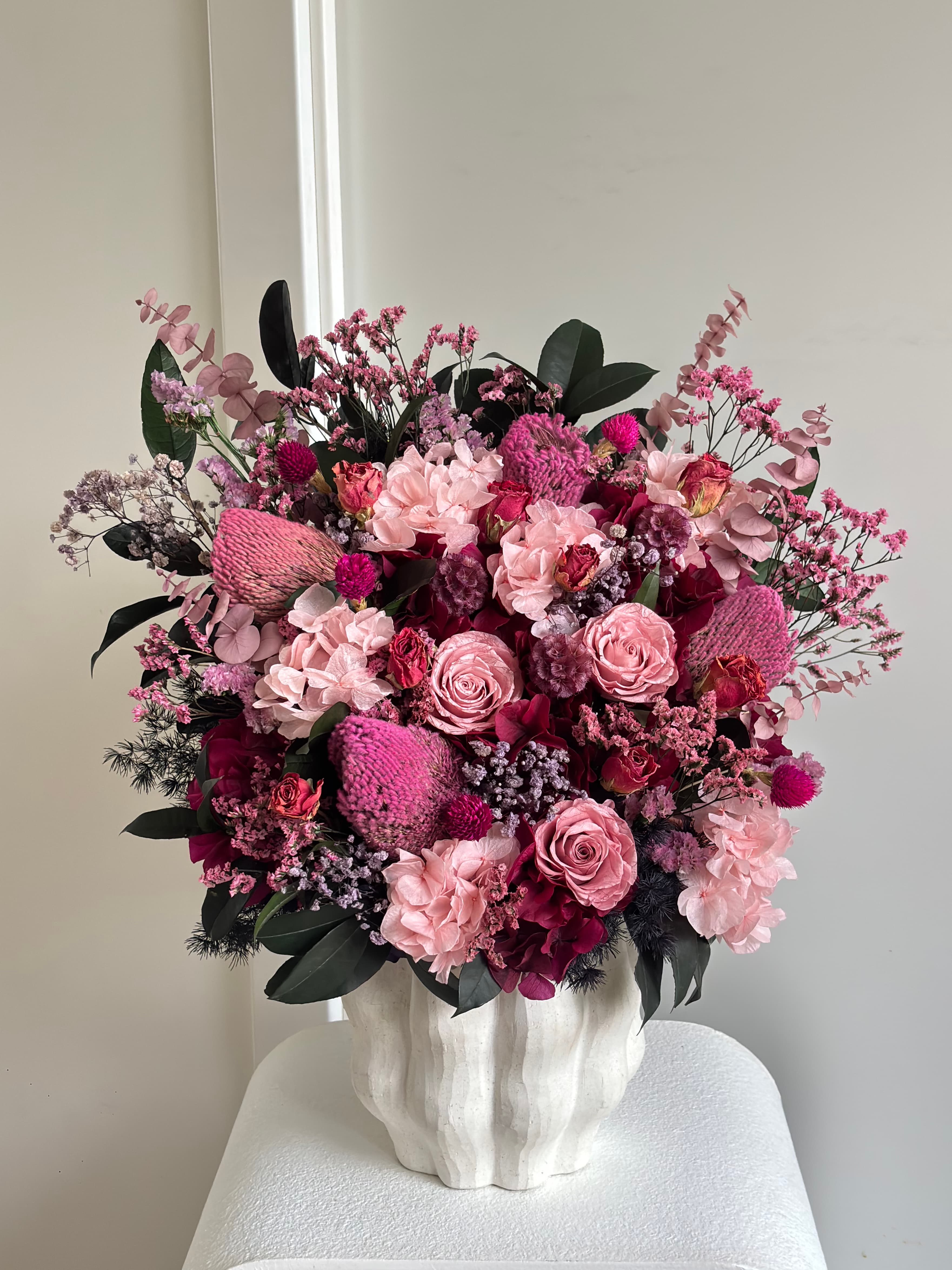
Preserved flowers (sometimes called "freeze-dried" or glycerin-preserved) go through a process where the water and sap inside the flower is replaced with a preserving solution. This keeps the petals soft, pliable, and often closer to their original colour. Preserved roses are the most common — they look almost fresh but hold their form for years.
At Studio Terra, we work with both, often combining them in the same arrangement to create contrast between texture and tone.
How long do they actually last?
Realistically: 1–3 years with minimal care, and often longer.
We've seen Studio Terra arrangements still looking beautiful three to four years after they were made. The honest answer is that longevity depends mostly on environment — which brings us to care.
The enemies of preserved and dried flowers
Four things will shorten the life of your arrangement:
Direct sunlight — UV light bleaches botanical pigments. Even a few weeks of strong afternoon sun can fade a deep burgundy arrangement to a washed-out pink. Keep arrangements away from windows with direct light.
High humidity — Moisture is the main cause of deterioration. Bathrooms, laundry rooms, and kitchens near a stovetop are bad environments. Bedrooms and living rooms are ideal.
Dust — Over time, dust settles into dried botanicals and can trap moisture. A gentle puff of air (a hairdryer on cool, held at arm's length) every few months keeps things looking crisp.
Heat — Extreme heat can cause dried materials to become brittle and drop. Keep away from fireplaces, radiators, and vents.
What you don't need to do
No water. No misting. No trimming stems. No feeding.
One of the genuine joys of preserved and dried flowers is that they ask almost nothing of you. You place them, you enjoy them, and they stay.
Are they worth it compared to fresh?
Flowers are personal, so this is somewhat a matter of taste. But the argument for preserved and dried is straightforward:
A fresh bouquet from a florist costs $60–$120 and lasts about a week. A Studio Terra arrangement at the same price point lasts one to three years. In terms of cost-per-day of enjoyment, it's not particularly close.
There's also the matter of what you're left with. A fresh arrangement's final days aren't its best days. A preserved arrangement stays at peak from week one through to year two.
Interested in a piece for your home? Browse our arrangements →