15 March 2026
How to Style Dried Flowers at Home
Dried and preserved flower arrangements are one of the easiest ways to add warmth and texture to a room. Here's how to place and style them for maximum impact.
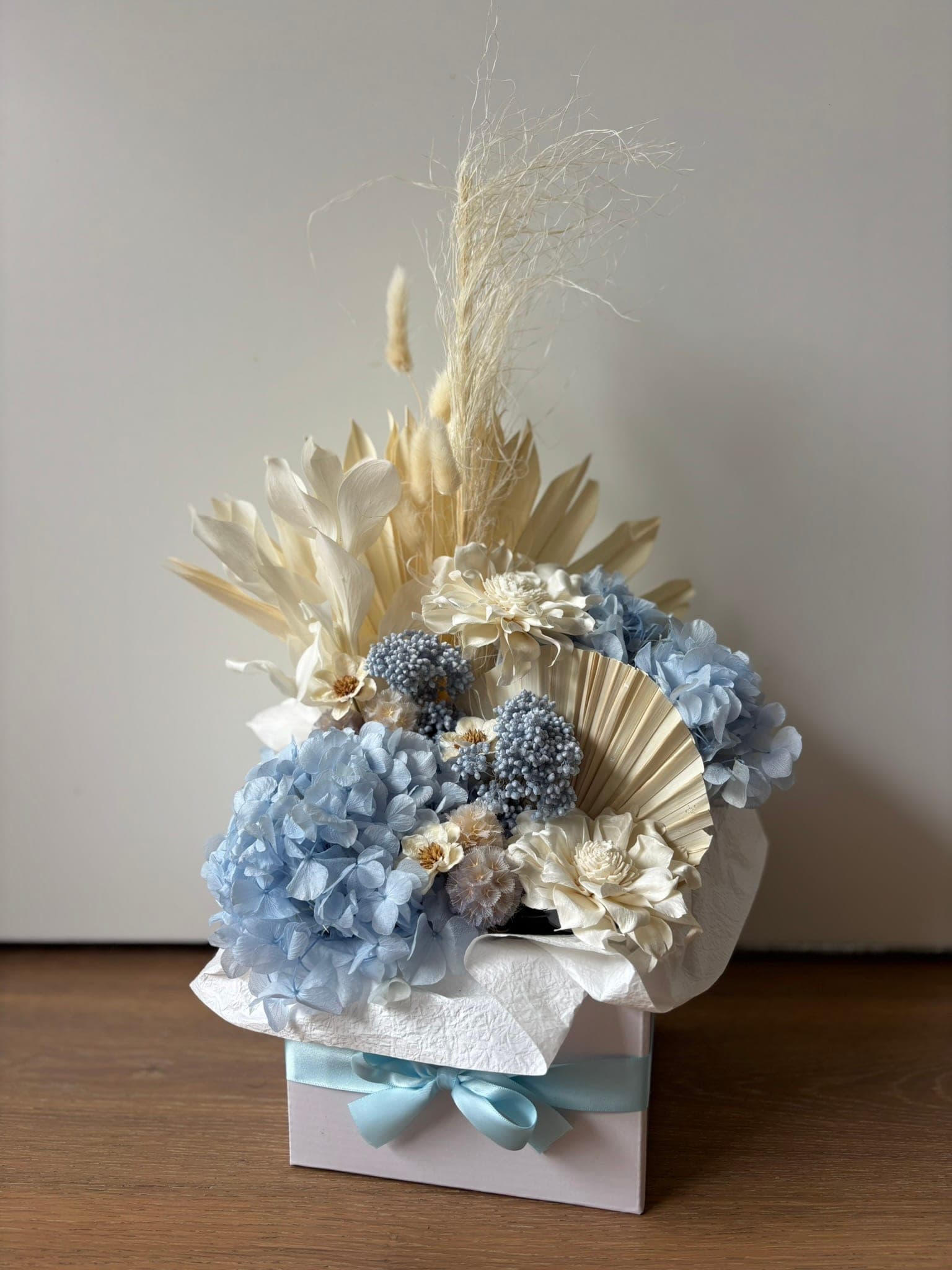
A well-placed dried flower arrangement can do as much for a room as a piece of artwork. The key word is placed — where you put it, and what you put it next to, matters as much as the arrangement itself.
Here's a practical guide to getting the most out of your piece.
Start with the right spot
Before you think about styling, think about placement. The two rules that matter most:
- No direct sunlight — UV fades botanical pigments over time, sometimes quite quickly. A spot with good ambient light but no harsh afternoon sun is ideal.
- Low humidity — Avoid kitchens and bathrooms. Bedrooms, living rooms, and entry halls are perfect.
Beyond the practical, think about sight lines. An arrangement placed at eye level on a shelf or console table will be noticed every time you walk past. An arrangement tucked in a corner at ankle height barely registers. Give it a spot where it can be seen.
Choosing the right vase or vessel
If your arrangement isn't already in a vessel, pairing it well makes a real difference.
For a dried flower arrangement: Earthy, organic vessels work best — raw ceramic, terracotta, hand-thrown pottery, or even a simple clear glass cylinder. Avoid anything too polished or modern; it can fight with the organic quality of the botanicals.
For a Studio Terra box arrangement: The arrangement comes presentation-ready — no vase required. These work best displayed on a flat surface: a coffee table, dining table, mantelpiece, or low shelf.
Height matters: If your flowers are tall and architectural (pampas grass, banksia stems, large dried alliums), pair them with a heavy, low vessel to balance the visual weight. For compact arrangements, a taller vase creates lift.
Pairing with your interior
Dried flowers have a warm, muted quality that tends to work across a wide range of interiors — but a few combinations are particularly effective:
Neutrals and warm whites — A cream or oatmeal-toned wall makes botanicals pop. Earthy reds, burnt oranges, and tawny pinks read especially well here.
Dark interiors (charcoal walls, dark wood furniture) — Pale, airy arrangements — whites, creams, and bleached grasses — create contrast and feel almost luminous.
Rattan, linen, raw timber — These materials share a natural, tactile quality with dried botanicals. They reinforce each other rather than competing.
Colour pick-up — If your room has a specific accent colour (a cushion, a rug, a piece of artwork), choose an arrangement that picks up that colour. The visual echo is subtle but satisfying.
The "one rule" of styling with dried flowers
If you're unsure where to start: place the arrangement where you spend the most time looking.
For most people, that's the sofa — specifically, whatever your sightline hits when you're sitting down and looking forward. That might be a TV unit, a mantelpiece, a console table, or a bookshelf. An arrangement placed in that natural sightline will genuinely improve how the room feels day-to-day.
Group or solo?
Both work. A single statement arrangement on a mantelpiece is clean and confident. A grouping of two or three pieces at different heights — perhaps a tall pampas arrangement, a medium bouquet, and a small posy — creates a richer, more considered feel.
If you're grouping, use odd numbers and vary heights. Three pieces feel intentional. Two can feel like you ran out of budget.
Want a piece built specifically for your space? Design your arrangement →